Overview
Designed a fairer, more visible path to bundle discounts by rethinking where and how add-on offers surface in the purchase journey.
Role
UI/UX Design
Year
2019
Company
Bellroy

The problem
Analysis from our data team revealed that first-time Bellroy customers, particularly those purchasing lower-priced items, were typically checking out with just one product, resulting in a lower average order value. While expected for high-priced purchases, this highlighted a missed opportunity for smaller items. We already offered Value Bundles, discounted product sets, but they were only discoverable in limited areas of the site, which pointed to an opportunity to surface add-on products more dynamically and incentivise multi-item carts more effectively.
We also identified a fairness issue in how bundle pricing actually worked: customers could only access a bundle discount if they discovered a pre-packaged set through browsing or the Bundles category. If a customer added the same qualifying items separately, the discount simply wouldn't apply.
Finding the right touchpoint
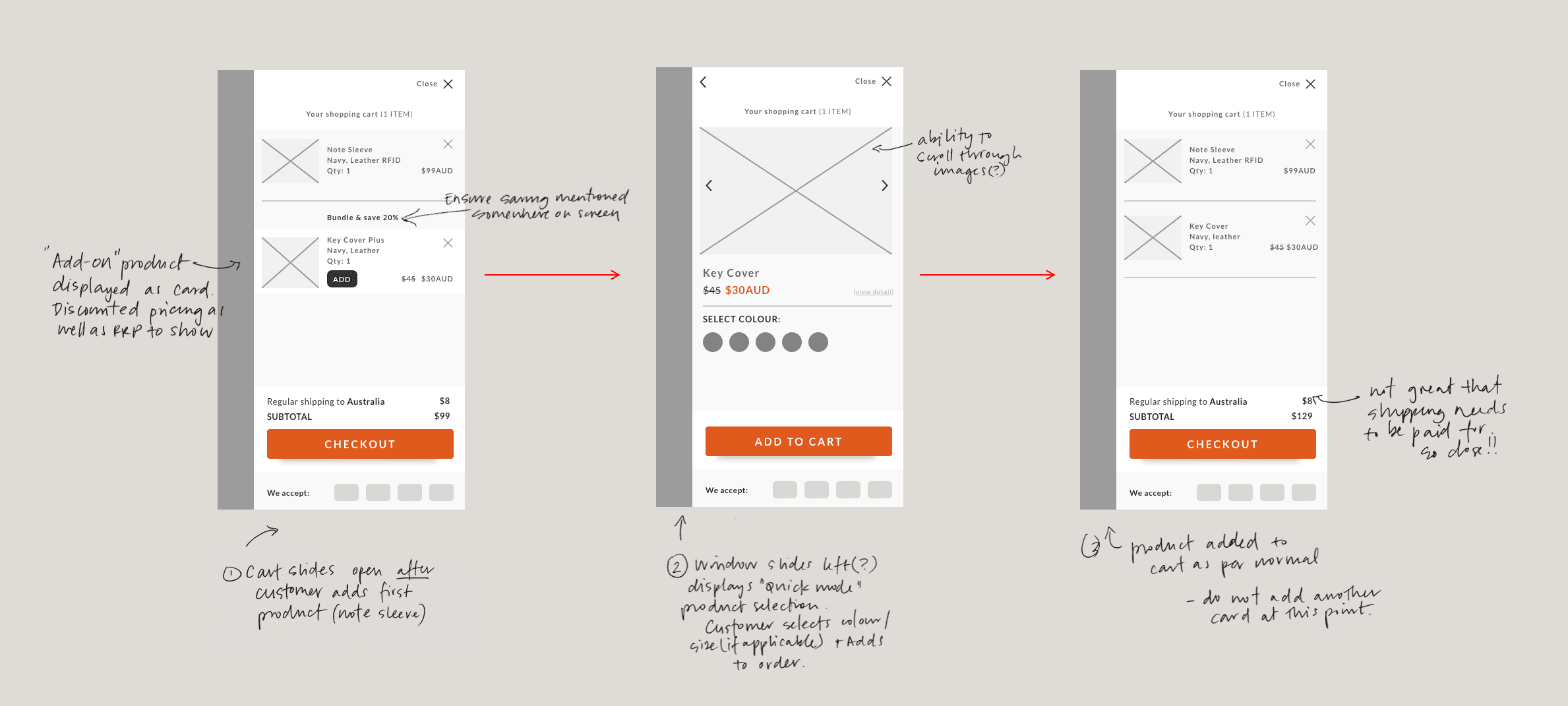
I identified three places an add-on offer could plausibly appear: the product page, cart, and checkout. Since the offer would only be relevant once a customer had already selected a primary product, these were the logical candidates. After wireframing and workshopping with the UX team, we landed on the cart as the optimal placement, it aligned with the existing user flow and let customers add relevant items without disrupting their path to purchase.

Product pairing logic
To ensure recommendations felt intentional rather than just an upsell, I collaborated with stakeholders across eCommerce, marketing, and product to define pairing rules, weighing product compatibility, end-use scenarios, and customer intent. Only specific products were made eligible to appear as an add-on at all, keeping the feature aligned with both brand integrity and user trust.
Validation and UI design
I validated the concept through early-stage wireframes and InVision prototypes to keep the experience seamless, then moved into high-fidelity UI design once the team aligned on direction and logic, building an interface that fit naturally within Bellroy's existing design language.